Story Club
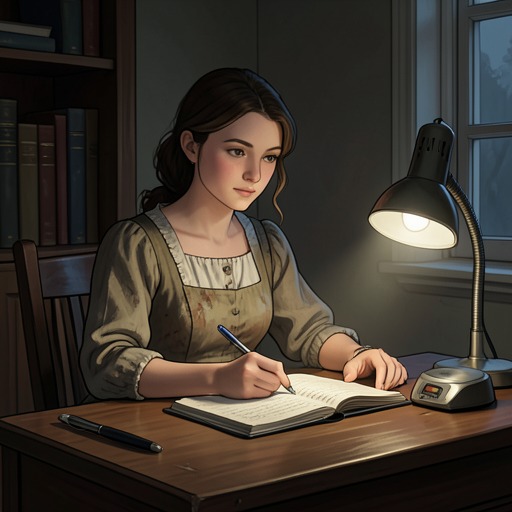
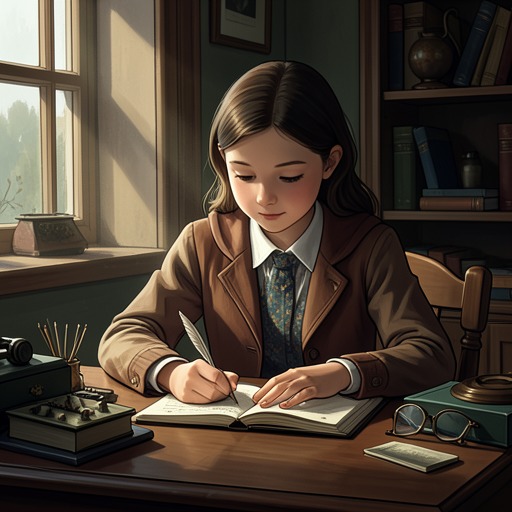
Anne of the IslandThe Story Club was a childhood writing circle associated with Avonlea school, where Anne Shirley and her companions invented and shared stories. Its tales became both a record of their youthful imagination and a comic inheritance Anne could revisit years later, while the club’s influence also surfaced in Diana Barry’s later intervention in Anne’s writing.
Setting and Practice
The club’s members wrote outdoors near Avonlea school, sitting beneath spruce trees or among ferns beside a brook. The evidence presents it as a shared pastime rather than a formally organized institution: its identity rests on the stories the young writers made together and the remembered pleasure of making them. Anne later recalled those summers as filled with sunshine and mirth, and found that the old manuscripts brought their atmosphere back to her.
The surviving stories varied in form and could be intensely sentimental. One of Anne’s manuscripts, written on sheets of wrapping paper, was a dialogue among asters, sweet peas, wild canaries in a lilac bush, and the garden’s guardian spirit. Anne remembered that she had written it on the day she fell through the roof of the Cobb duckhouse on Tory Road. Its improvised material and fantastical speakers show the range of invention the club’s youthful writing encouraged.
Stories and Their Audiences
Anne’s My Graves exemplified the group’s taste for extravagant tragedy. It followed a Methodist minister’s wife who wandered across the country and buried eight of her nine children in places ranging from Newfoundland to Vancouver; the ninth survived as a hopeless cripple. Anne had described the children’s deathbeds, graves, and epitaphs, and remembered crying over the story as she wrote it. Its effect on its audience was equally outsized: Jane Andrews’s mother scolded her because so many handkerchiefs had accumulated in the wash after Jane read it. Years later, Anne and Stella Maynard could laugh at the tale’s excesses without losing sight of the earnest feeling that had produced them.
The club’s writing also furnished a practical model for playful revision. When Diana entered Anne’s story in a contest, she added repeated references to Rollings Reliable baking powder, including one in the romantic ending. Diana explained that her experience in the old Story Club had helped her make the changes. Anne was shocked by the alteration, while Diana celebrated the twenty-five-dollar prize. The episode shows the club’s influence extending beyond recollection: its shared practice had taught Diana how to handle a story’s scenes and ending, even in a way Anne had not intended.
Memory and Continuing Influence
During their final year at Redmond, Anne found the old manuscripts in her trunk while seeking something to cheer herself after studying. Their tearful plots struck her as funny, but reading them also restored the memories of the club’s outdoor gatherings and the summer days in which they had been written. In the stack, the wrapping-paper dialogue about the garden caught her attention; after reading it intently, she smoothed out the crumpled page and resolved to act. The old writing thus moved from comic keepsake to renewed creative prompt.
The Story Club’s significance lies in this double life of its stories. They preserve the exuberance and excess of childhood, and later invite their authors to see those same qualities with affection and humor. For Anne, the papers also reconnect imaginative play with the possibility of writing again: what once belonged to a circle of schoolmates remains available as material for a changed, more mature self.